Panel Upgrades
Panel Change vs. 200A Service Upgrade: What Is the Difference?
These two projects are often confused. Learn which equipment changes, when added capacity is needed, and how an electrician decides between them.
By Sebco Electric Ltd · Updated November 14, 2026 · 7 min read
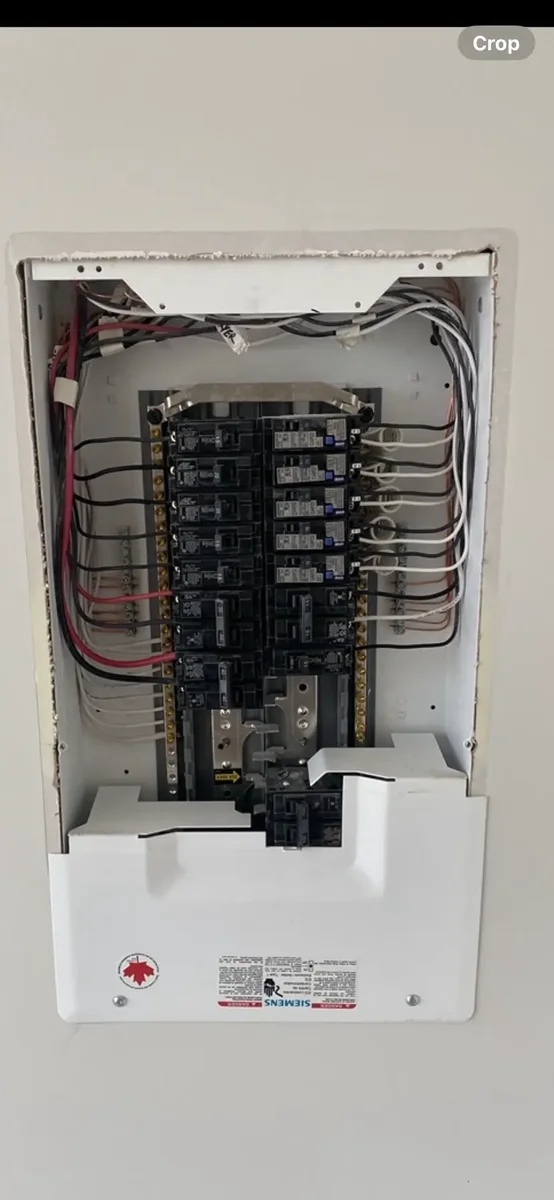
The main difference is electrical capacity
A panel change replaces the distribution panel but usually keeps the existing service capacity. A 200A service upgrade increases the amount of electricity that can be supplied to the home and may require several upstream components to be replaced as well.
The distinction matters because a larger-looking panel does not automatically give a home more service capacity. The panel, main breaker, conductors, meter equipment and utility connection must work together as a complete rated system.
Choose a panel change when capacity is already adequate
A panel-only replacement is commonly used to modernize older equipment, add breaker spaces, address damage or corrosion, improve labelling, or support a renovation without increasing the incoming service size.
For example, a home may remain on a 100A service but receive a modern breaker panel with better circuit organization and room for additional circuits within the available electrical capacity.
- The home keeps its current service amperage
- The existing panel and breakers are replaced
- Branch circuits are transferred and clearly labelled
- Grounding and bonding are reviewed and updated as required
- ESA notification and inspection are coordinated
Choose a service upgrade when the home needs more capacity
Moving from 100A to 200A is a broader project. It may require a new panel, larger service conductors, a compatible meter base, larger conduit, upgraded grounding and bonding, and new main service equipment.
The work also involves the local utility because power must be disconnected before the existing service equipment can be replaced and reconnected after the electrical work and inspection are complete.
- Level 2 EV charging added to an already busy service
- Hot tub, sauna, heat pump or electric heating
- Basement apartment or secondary dwelling unit
- Home addition, detached garage or workshop
- Several major electrical loads planned together
How an electrician determines what you need
The assessment starts with the service rating and condition of the existing panel, meter base, conductors, conduit, grounding and bonding. The electrician also reviews the loads already connected and the equipment you plan to add.
For an EV charger or another continuous load, a load calculation or a review of suitable hydro demand data can help establish whether the existing service has enough capacity. If it does, a full 200A upgrade may be unnecessary.
What happens on upgrade day?
For a complete service upgrade, the utility disconnects the incoming supply, the old service equipment is removed, and the new rated equipment is installed. Existing branch circuits are transferred, organized and labelled. ESA then inspects the work before the utility restores power.
Sebco Electric coordinates the utility and inspection steps so a typical residential upgrade can be completed and power restored within the same working day.
Frequently asked questions
Does a new 200A panel mean I have 200A service?
Not by itself. The service conductors, meter equipment, main protection and utility connection must also be properly rated before the home has a complete 200A electrical service.
Is a 200A service always better?
It provides more capacity, but it is not automatically necessary for every home. The right choice depends on present demand, planned electrical loads and the condition of the existing service.
Can the panel and EV charger be installed together?
Yes. When additional capacity is required, coordinating the service upgrade and EV charger circuit as one project can simplify scheduling, inspection and final testing.