EV Charging
Hardwired EV Charger vs. NEMA 14-50 Outlet: Which Is Better?
Both connection methods can work well. Compare charging output, portability, outdoor suitability and long-term use before choosing.
By Sebco Electric Ltd · Updated November 14, 2026 · 7 min read
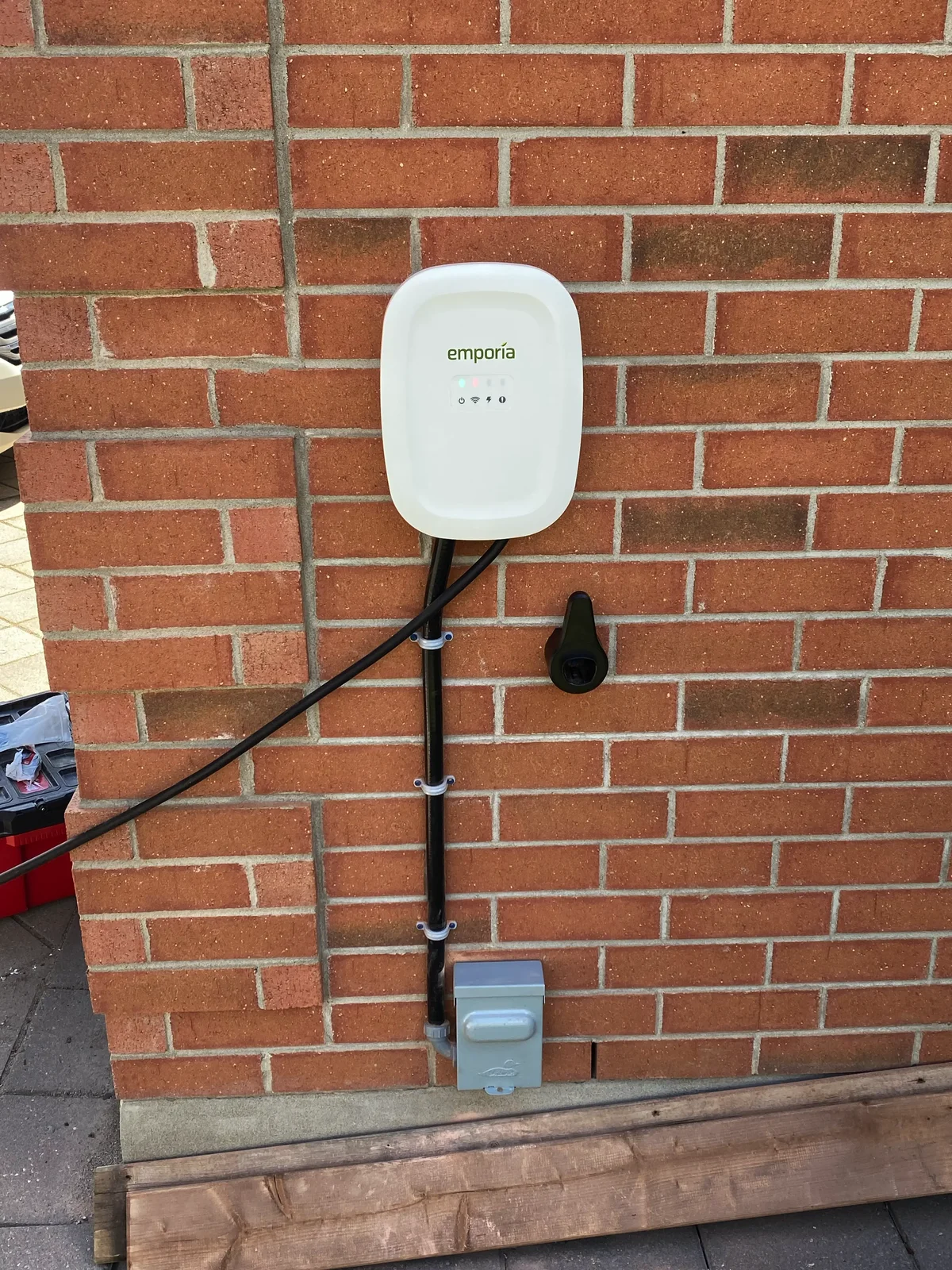
Both options can be appropriate
A hardwired charger is permanently connected to its dedicated circuit. A plug-in charger connects to a compatible receptacle, commonly a NEMA 14-50. The better option depends on the charger, location, desired output and whether portability matters.
In either case, the circuit must be sized for the charging equipment and the home must have enough available electrical capacity.
When hardwiring is the better fit
Hardwiring is common for a charger that will remain in one location, particularly at higher residential charging outputs. It creates a direct connection with no plug-and-receptacle interface and can simplify a suitable outdoor installation.
The charger is less convenient to move, but that is rarely a concern for homeowners planning a permanent charging location.
- Permanent, clean installation
- Common choice for higher-output charging
- No receptacle or plug connection to manage
- Often preferred for suitable exterior locations
- Charger replacement should be completed by a qualified electrician
When a NEMA 14-50 receptacle makes sense
A NEMA 14-50 receptacle can support compatible plug-in charging equipment and lets the charger be removed without altering the permanent wiring. This may appeal to renters with permission, frequent movers, or homeowners who already own a compatible portable unit.
The receptacle, enclosure and charger must all be appropriate for the location and intended use. The charger must also be configured within the circuit’s permitted continuous load.
- Compatible charger can be unplugged and moved
- Useful for some portable charging setups
- Requires a suitable high-quality receptacle and installation
- Weather-rated equipment is required where exposed
- Charging output may be lower than some hardwired configurations
Four questions that make the decision easier
Start with the manufacturer’s installation instructions for the charger you plan to use. Then consider how the equipment will serve the household over the next several years.
- What is the charger’s maximum continuous output?
- Will the charger stay permanently at this home?
- Is the location indoors, outdoors or exposed to weather?
- Does the existing service have capacity for the desired circuit?
What a professional installation covers
Sebco Electric assesses the panel, completes the required load calculation, sizes the breaker and wiring for the selected charger, routes and supports the circuit, installs the connection method, and coordinates the ESA notification and inspection.
The finished installation is tested before use. For a hardwired charger, this includes mounting, termination and operation checks. For a receptacle, it includes verifying the outlet, enclosure and compatible charging equipment.
Frequently asked questions
Can a hardwired charger deliver more power?
It can, depending on the charger and circuit. For example, a charger configured for 48A continuous charging is typically installed on a dedicated 60A circuit and is commonly hardwired.
Can a NEMA 14-50 outlet be installed outside?
It may be possible when the receptacle, enclosure and connected equipment are approved for the environment and the complete installation meets applicable electrical requirements.
Which option costs less?
The final price depends more on circuit length, routing, amperage and site conditions than on the connection method alone. A quote should compare the complete installation scope.